By: Alison CoulsonSome birds give literal meaning to the phrase, "you are what you eat."
-------
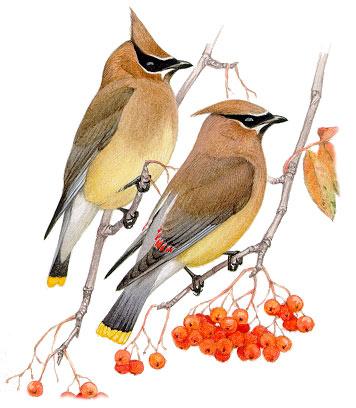
Up until a few decades ago, cedar waxwings were distinguished by theiryellow-tipped tails. But beginning in the 1960s, these birds began toshow some orange in their tail feathers in the Northeast.Author Marie Read says the new color came from changes in the birds'diet. Read says cedar waxwings started eating orange berries fromhoneysuckles, a non-native ornamental shrub."The pigments that are in these introduced honeysuckles end up makingthe tail orange, so in this respect it really is kind of 'you are whatyou eat.'"
Read, a wildlife photographer, has written a new book, "The Secret Livesof Common Birds." Read says cedar waxwings aren't the only birds thatchange color according to the foods they eat."There is a lot of evidence that cardinals, northern cardinals, thewonderful red birds that we see, if you look at them as individuals, youlook at a lot of different ones, some of them are very bright red, someof them are deep crimson, some of them are more orange and some of themare kind of washed-out looking. Well, that apparently is due to thekinds of things they are eating."The varying shades of red and yellow in most birds result from theamount of carotenoid-based pigments they get from their diet.
And a bird's color, especially in males, serves a purpose far beyond vanity.Take that northern cardinal. Scientists say more brightly colored maleshold territory with more abundant food, and they attract higher qualityfemales. So which comes first: do the brighter males get betterterritory because of their color? Or does their better red result fromruling over the best food sources? Scientists say they don't yet know.